Yoink
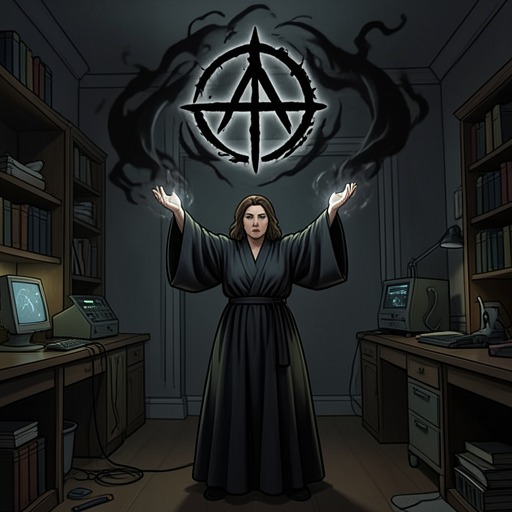
The Calamitous Bob“Yoink” is the name Viviane Saint-Lys gives to a spell that penetrates a creature’s mana conduits, pulls its mana away, and can leave the target dead or reduced to black ash. Its decisive significance lies in the contrast between sound and effect: the word is childish and embarrassing, while the magic is intimate, painful, and militarily useful. Through repeated use against revenants and other undead creatures, the expression becomes both a practical weapon and a recurring marker of Viviane Saint-Lys’s irreverent approach to survival.
Definition and First Use
Yoink first proves itself when Viviane Saint-Lys casts it against a revenant after dragging the corpse into position beside a boulder. The spell initially goes somewhat wide, and penetrating the revenant’s conduits is more difficult than expected, but the target offers almost no resistance. Viviane Saint-Lys feels her own mana join with the revenant’s before she pulls it away; the extraction is not merely easy but enjoyable. The spell’s operation is therefore established through direct bodily sensation: it is a matter of reaching into another being’s magical channels, joining the available mana to her own, and withdrawing it.
The immediate result is destructive. The revenant blackens and falls apart below the boulder, leaving skeletal pieces beneath a dry, ashy substance. Even the stench lessens afterward. The first successful use thus combines tactical confirmation with grotesque physical aftermath: Yoink is not a symbolic threat or a disabling trick, but a drain powerful enough to destroy an undead body.
The Name and Its Recurrence
The spell’s name is born in the same instant as its first success. Viviane Saint-Lys cries, “Yoink! Hahaha. OH SH—” before realizing that the word has joined “Bzzt!” among her embarrassing terminologies. The interruption preserves the joke’s awkwardness while the result beneath it remains deadly. The contrast is reinforced by the golem’s disapproving glare, which places the absurd expression inside a scene of serious danger and gives the naming a social consequence as well as a tactical one.
The word quickly becomes repeatable rather than accidental. When another revenant ventures too close, Viviane Saint-Lys turns toward it and says, “Yoink.” The creature falls dead immediately. The terse repetition strips away the first spell’s surprise and makes the expression function like a command: once the spell has been tested, its name becomes a compact signal for a known magical action.
Development in Combat
Yoink also works against living or differently structured undead threats that move at different speeds. When crawlers pursue Benetti, their unnatural gait makes them much faster than the ponderous gut spillers. Viviane Saint-Lys waits until the first crawler is in range, aims, and casts Yoink as it jumps. The spell travels through a complex channel, withdraws without too much difficulty, and robs the crawler of its strength in midair. In this use, the spell is not simply an execution method: it interrupts motion, defeats an active attack, and converts the creature’s momentum into an opening for the defenders.
At another chokehold, Viviane Saint-Lys uses Yoink while Cernit identifies a nearby crawler. The creature falls dead, and black mana floods her conduits. The scene makes the exchange explicit: the spell removes power from the enemy while replenishing Viviane Saint-Lys’s own magical reserves. That reciprocal structure helps explain why the expression recurs during prolonged combat. Each successful drain is both an attack on the opposing force and a source of further capacity for the caster.
The repetition becomes especially stark when Viviane Saint-Lys faces a press of enemies near a stairway. With Jor guarding the adjacent space, she casts Yoink three times in succession. The repeated calls mark an escalating rhythm, turning a single improvised spell into a practiced response that can be applied beat after beat under pressure. The expression’s comic brevity consequently acquires the cadence of battlefield discipline.
Mass Forms and Ultimate Expansion
The spell’s first larger development is announced as “MASS YOINK!” After a row of targets glows black, the puppeteer shrieks and the affected creatures explode into black ash simultaneously. The new ash slows the assault, and Viviane Saint-Lys takes only three seconds to breathe before casting again. Mass Yoink therefore extends the original principle from one target to a coordinated group, with the immediate battlefield consequence of delaying an attack and creating time for another cast.
Its most advanced form is named “True mass yoink.” As the spell takes shape, time seems to stop for Viviane Saint-Lys. The magic expands through her mind and the surrounding air while the scene is rendered with extreme sensory clarity: dry dust on the wind and the dried eyes of the nearest revenant become vivid details. She experiences the moment as glorious, horrifying, and exhilarating before speaking the name.
The resulting spell is a network of black spears that cuts through the surrounding mass, burrows toward mana, takes it, spreads, tracks, and then withdraws at the limit of its reach. Its structure is therefore more elaborate than the earlier single-target cast, and its effect is described as effortless on a large scale. Immediately afterward, Viviane Saint-Lys’s interface records “Mana manipulation: Intermediate 1,” linking the perfected expression to a measurable advance in her magical skill.
Narrative Function and Significance
Yoink embodies the book’s recurring collision between game-like terminology and visceral danger. Its name sounds unserious, yet the spell blackens corpses, kills revenants, stops a crawler in mid-jump, destroys groups in simultaneous explosions, and harvests dense black mana. The resulting irony is not incidental: Viviane Saint-Lys’s humor remains active precisely while she is performing an act of magical violence that requires close contact with an enemy’s internal conduits.
The expression also traces a progression from experimentation to mastery. It begins with an uncertain cast that goes wide, becomes a dependable one-word execution, expands into repeated battlefield use, and culminates in the technically named “True mass yoink.” The humor survives every stage, but the scale changes. What first sounds like an embarrassing personal label becomes a recognizable combat method whose consequences shape movement, endurance, and survival in encounters with the undead.